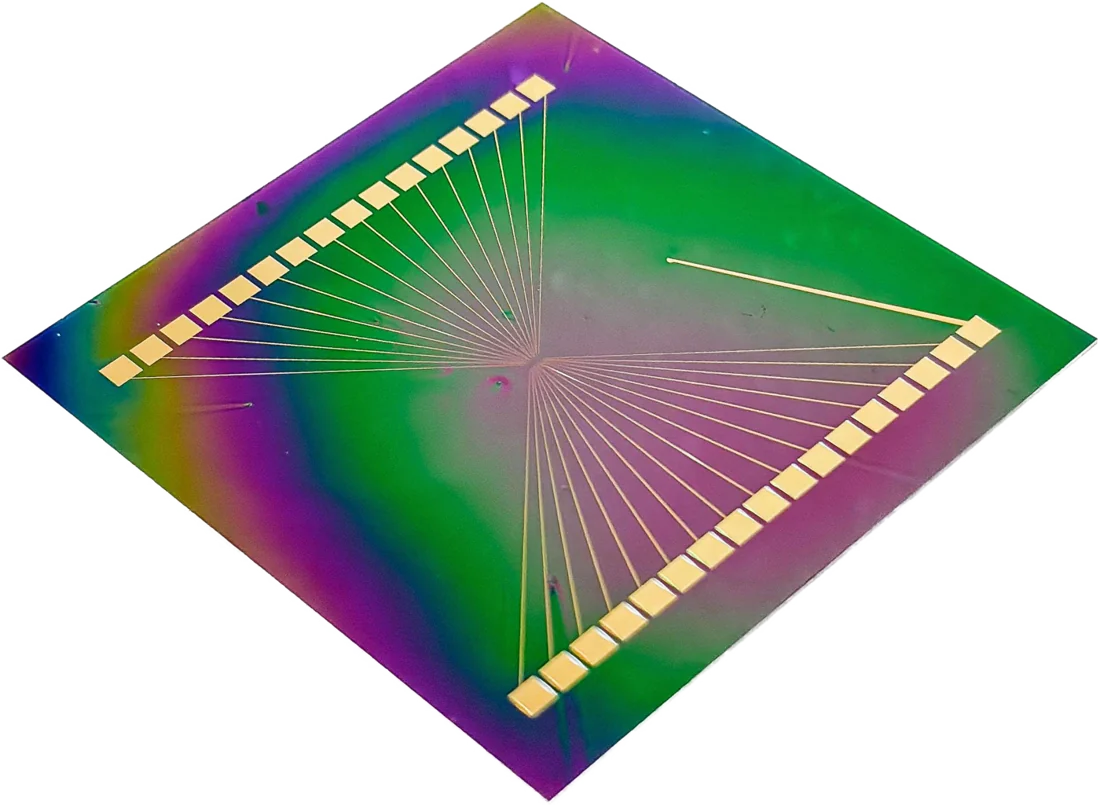
Fig. 1 · The 32-electrode microelectrode array I fabricated for the Neuron Interface Project. Ti/Au traces on Si under 300 nm SiN; the colour is thin-film interference. Minnesota Nano Center.

Ethan Chung · Electrical Engineering, University of Minnesota

I build hardware
from the wafer up.

I fabricate electrode arrays in the cleanroom, design the PCBs that talk to them, write RTL for custom silicon, and co-founded a startup that just signed its first pilot.

  • Honors EE '28UMN · GPA 3.92 · 3× Dean's List
  • 1st place PCB designSMTA International, 2025
  • Co-founder & CTOAnoura · pilot signed
  • 2× MVP grants$3,000 each, 2024 & 2025

Index

Eight projects, six disciplines

Nanofabrication, PCB design, chip design, embedded firmware, software and a company. Click any row for details; ▶ rows have a one-minute narrated video.

Featured project · Neurotech

Neuron Interface Project

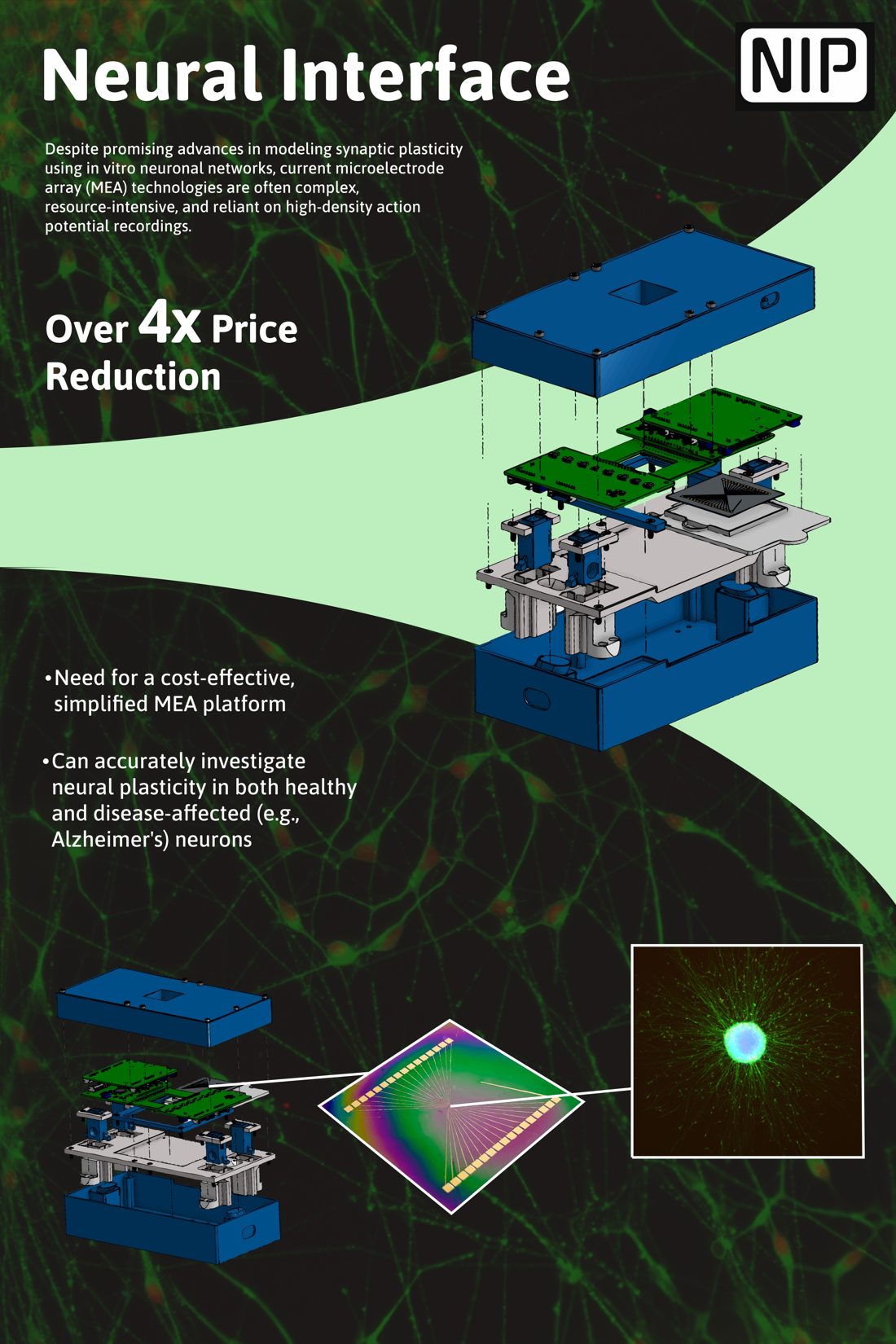
A University of Minnesota student team building a closed-loop rig that lets living neurons play Pong. I led nanofabrication of the electrode chip and designed the stimulation electronics.

▶ Narrated overview · about a minute · captions built in

The goal

Grow neurons on a microelectrode array (MEA), stimulate them with a game state, record how they fire, and decode that into a paddle move, so a living network can learn a task in a closed loop. Earlier, the team's MVP-grant pitch was a low-cost, reusable MEA system for biology labs priced out of $10k+ commercial rigs.
What I did

  • Nanofabrication lead (Sep 2024 – Feb 2026): wrote and ran the 32-electrode MEA process at the Minnesota Nano Center.
  • Designed the DAC stimulation circuitry for driving cortical neurons.
  • Built the Mini Stim board to validate the stim circuit and co-designed the Halo board in KiCad.
  • Owned the output/stimulation schematic in the original board split.

Who did what

  • Nikhil Iyer Project lead, funding
  • Levi Krogh Microcontroller board, headstage
  • Alex Wan Recording (In) board, Halo board
  • Kevin Vo, Khidhr Kotaria + Software, biology, cultures

Where we left off

  • 32-electrode Ti/Au + SiN chip, plus a glass version
  • Main, In, Out and headstage boards built
  • Mini Stim v2, 4-layer

Cross-section · live

UV · 365 nm CF₄/O₂ plasma Si substrate

Step 1: Clean Si wafer

  1. 01

    Clean the wafer

    Sonicate in acetone, rinse, DI water, N₂ dry. Everything downstream depends on a clean surface.

  2. 02

    Photolithography

    Spin AZ1512 positive resist (~1.3 µm), soft-bake, align the photomask and expose at 365 nm, then develop the electrode and trace pattern.

  3. 03

    E-beam evaporation

    15 nm titanium adhesion layer, then 150 nm of gold for the conductive traces and electrode pads.

  4. 04

    Lift-off

    Strip the resist in remover, which takes the unwanted metal with it and leaves only the patterned Ti/Au traces.

  5. 05

    PECVD insulation

    Deposit 300 nm of silicon nitride at low temperature to insulate every trace from the culture medium.

  6. 06

    RIE electrode openings

    A second lithography layer plus CF₄/O₂ reactive-ion etching opens the nitride over each of the 32 electrodes and the contact pads. Lesson learned: leave enough resist that the nitride etches evenly.

The electronics stack

Six boards between a laptop and a living network

Control

Main board

STM32F723 microcontroller, USB link to the host, timing for record and stim.

Record

In board

32 channels through ADS1299 24-bit biopotential ADCs.

Stimulate

Out board

LTC1650 DAC driving an OPA192 Howland current source, routed by ADG1219 switches.

Interface

Headstage

Mechanical and electrical interface between the MEA and the electronics.

My design

Mini Stim

Compact stimulator built to prove the DAC stimulation circuit before committing it to the main stack.

Co-designed

Halo board

Ring-shaped stimulation board in KiCad (V1 "stim complete"), revised after team board review.

Featured · Startup

Anoura

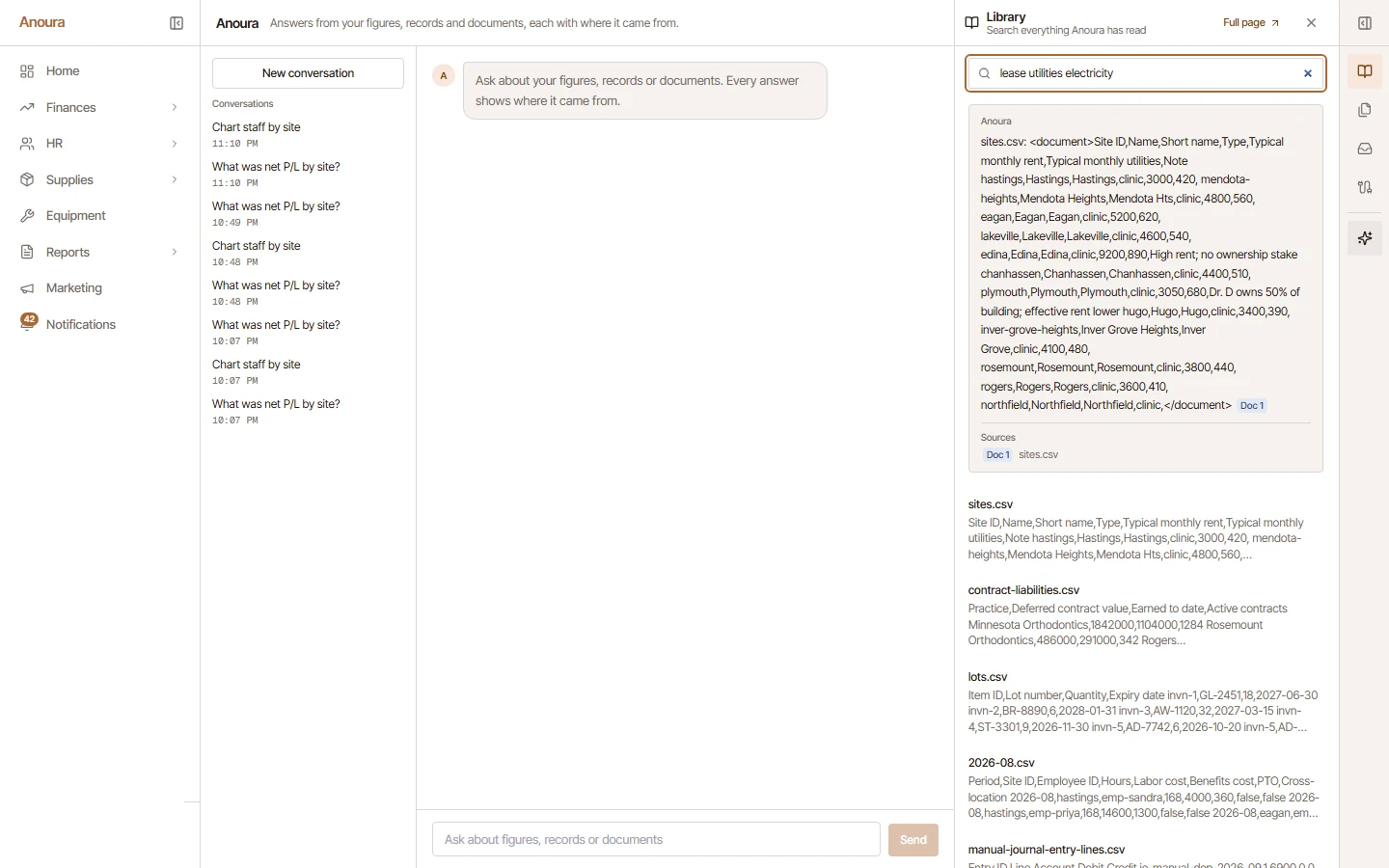
I co-founded Anoura and run it as CTO & President. It turns a multi-location orthodontic group's scattered systems and documents into one source of truth: per-location P&L, alerts, and an assistant, where every number links back to where it came from.

  • Pilot signedEverSmilesOrthodontics · Chicago
  • Pilot goes liveLate Nov 2026Running on their real data
  • Design partner13 locationsMinnesota Orthodontics, Twin Cities
  • IncorporatedAnoura Inc.Delaware C-corp · Sep 2026
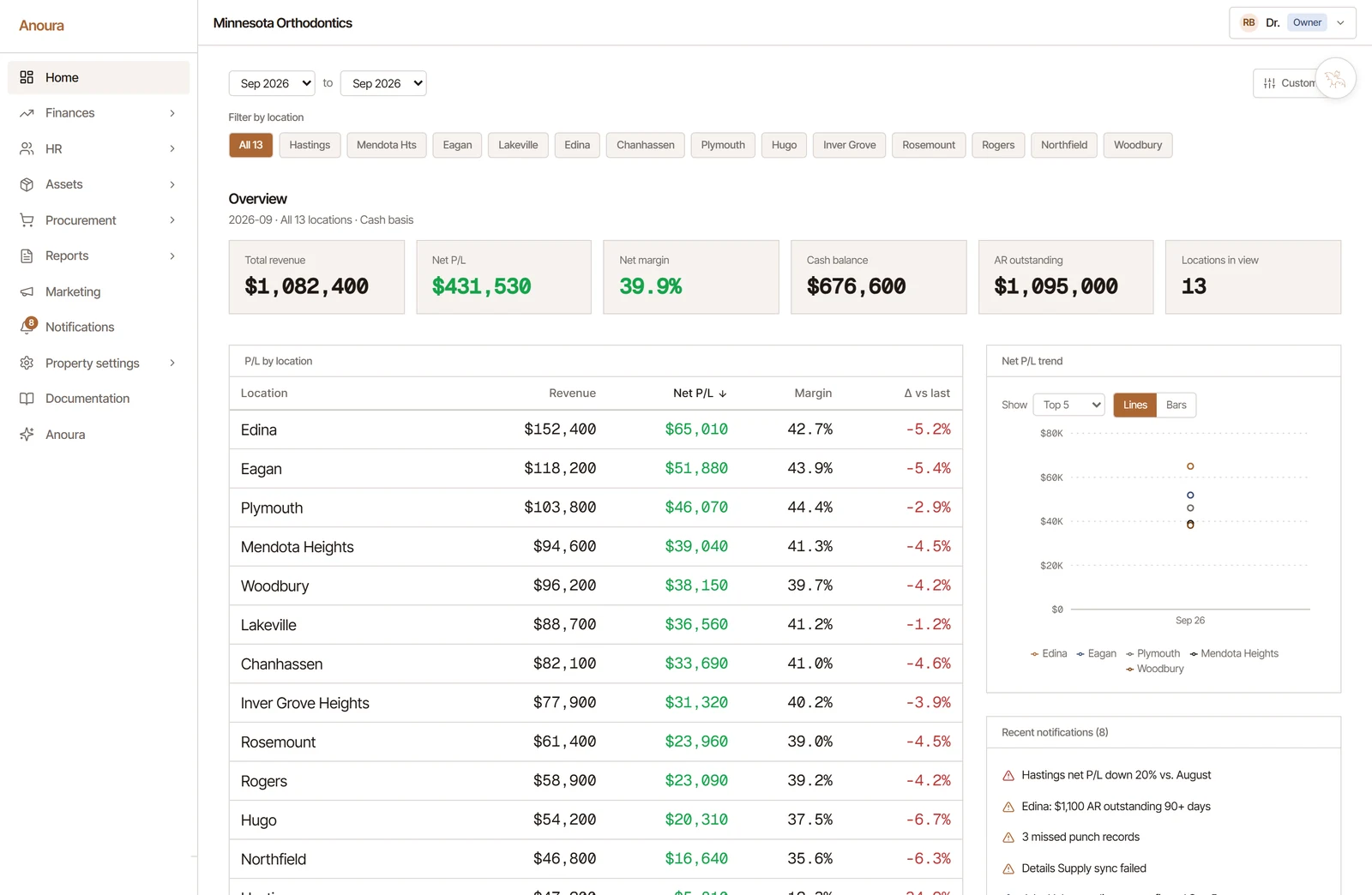
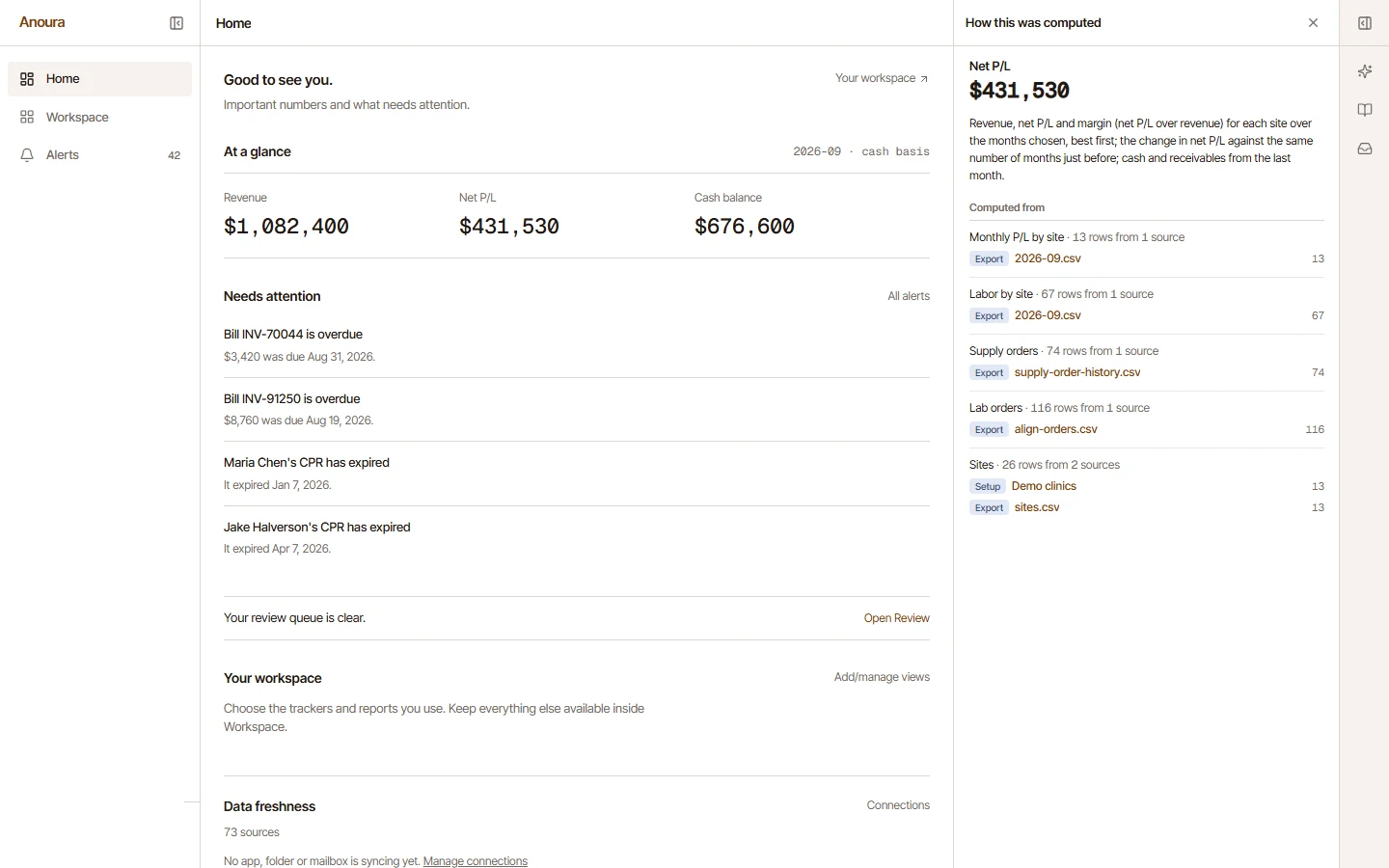
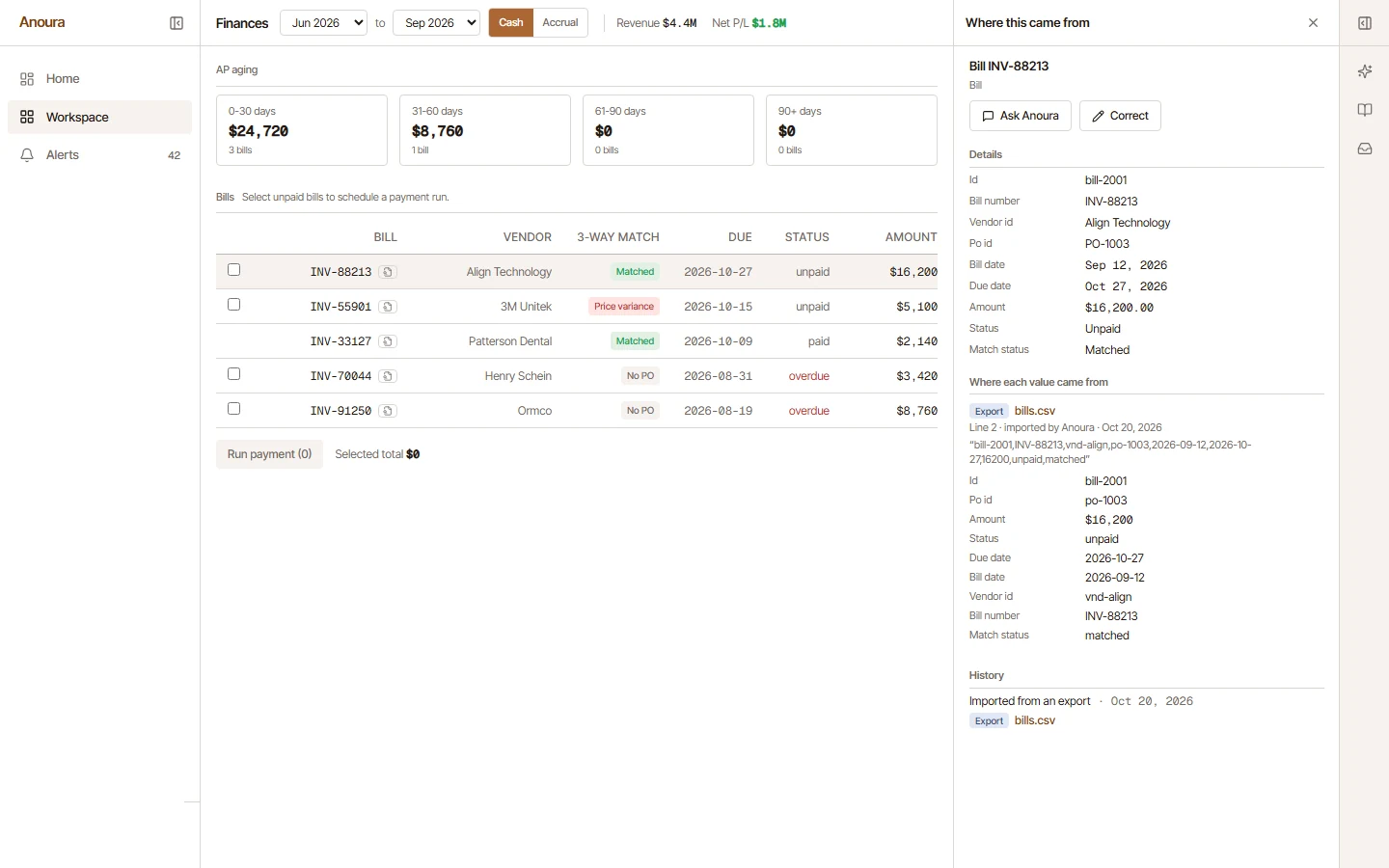
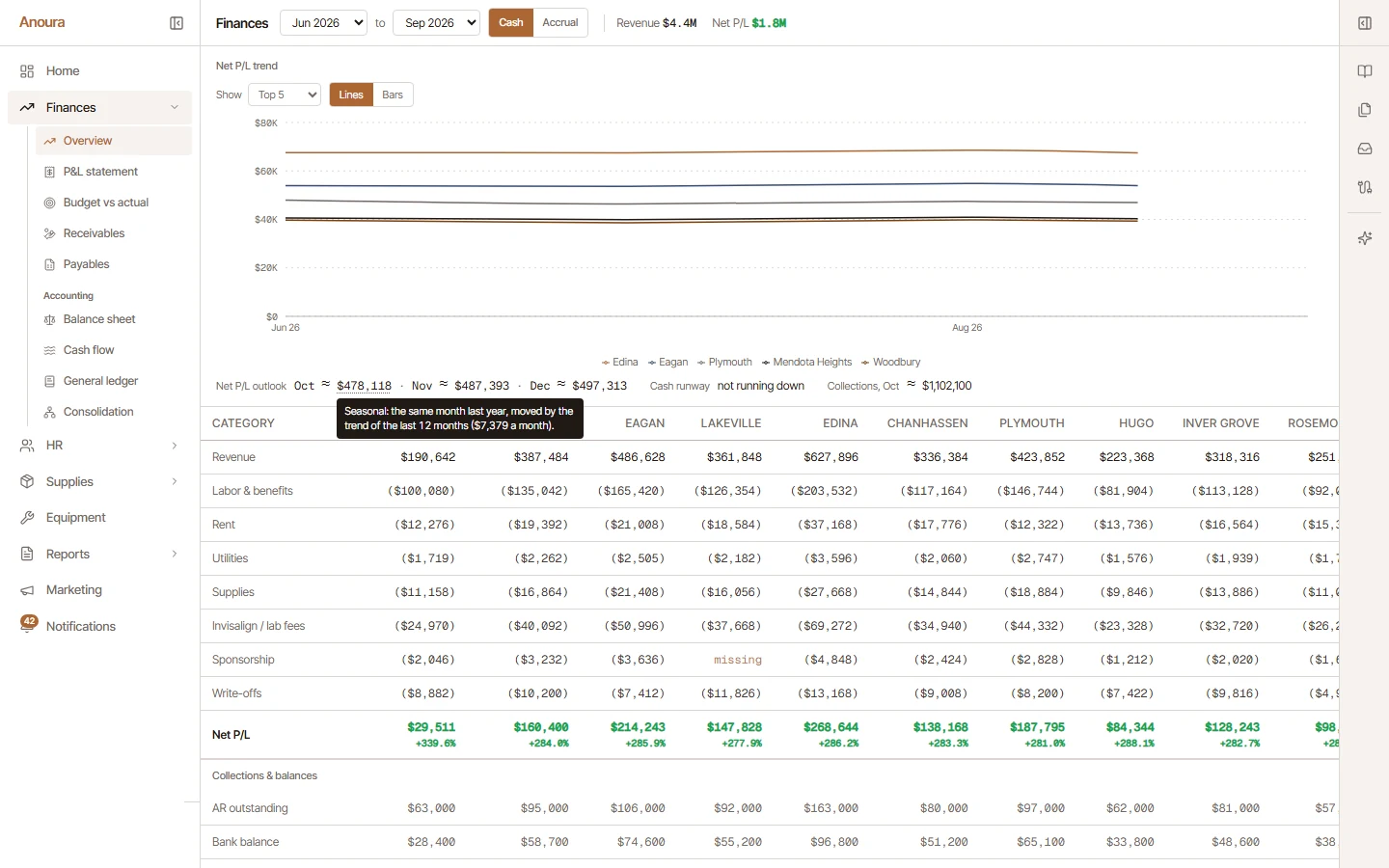
These are real screenshots, not mockups. Captured from the running product on demo data: a FastAPI + Postgres/pgvector backend, a Next.js front end, a Greyfinch connector, role-based access and a single-tenant deployment built for HIPAA.
Anoura home: revenue, net P&L, margin, cash and AR across 13 locations, with a P&L-by-location table and trend chart Anoura home with the 'How this was computed' panel open, listing the source files behind the net P&L figure Accounts payable with a 'Where this came from' panel tracing a bill back to the imported file and row Finances overview: net P&L trend and a P&L statement broken out by site The Anoura assistant answering a question with the source documents shown in a library panel

Owner dashboard: every location's revenue, P&L and margin on one screen.

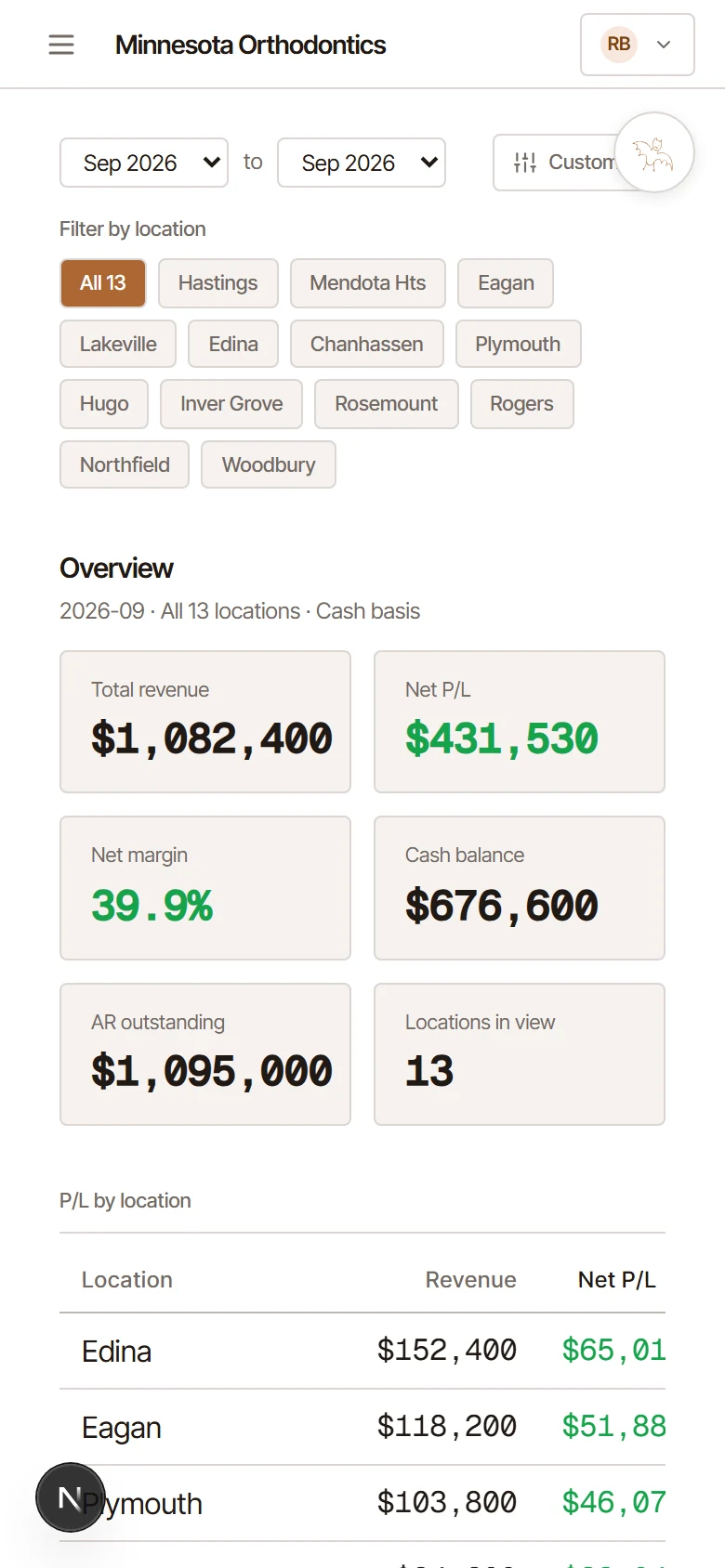
Anoura on a phone: the owner's overview at 375px wide
Owners check it on their phone, so every screen works at 375px.

What I own as CTO

  • Technical strategy and the system architecture
  • Data connections: Greyfinch practice management, ADP payroll, practices' own files
  • The product and front end that owners and managers use every day
  • Requirements gathered on-site with our design partner and pilot customer

Co-founded with Nikhil Iyer and Anh Do.

From the lab

Behind the scenes

I post cleanroom and hardware work on NanoFart, my nanofabrication Instagram: wafers, PCBs, late-night board orders and everything that goes wrong in between.

Watch on Instagram ↗

Projects

Work across the whole stack

From photoresist to product. Every project with a ▶ has its own one-minute narrated video.

Experience

Where I've worked

University of Minnesota, Twin Cities

B.E.E., Electrical Engineering · Honors Program

College of Science & Engineering · expected June 2028

3.92 GPA3× Dean's List
  1. Anoura Co-founder, CTO & President

    B2B analytics platform for multi-location dental service organizations: a unified operational data layer across practice-management and payroll systems (Greyfinch, ADP, custom software). Signed a pilot with EverSmiles (Chicago), going live late November 2026. Design partnership with a 13-location Twin Cities orthodontic group.

  2. Maxwell Labs EE & Process Engineering Intern

    Developed a process for quartz thin-film (sub-5 µm) microfluidic wells that hermetically contain dye for ASPL experiments. Sputtering, photolithography, RIE, wet etching, fusion bonding and characterization.

  3. UMN ASIC Club (Sone Arch Silicon) Founder & Technical Lead

    Leading RTL design and testbench verification in Verilog for a 2×2 systolic array headed to tapeout. Coordinating events with the Minnesota Nano Center and other UMN groups.

  4. Minnesota Nano Center Undergraduate Lab Assistant

    Ran deposition and etch tests on cleanroom equipment and handled safe use and disposal of hazardous chemicals and waste.

  5. UMN Neuron Interface Project Nanofabrication Lead

    Led fabrication of microelectrode arrays in the cleanroom and developed DAC circuitry to stimulate cortical neurons.

1st

PCB Design: SMTA International Bright Manufacturing Challenge

Plus 4th overall with our line-following robot · October 2025

2×

$3,000 UMN MVP Grant (MIN-CORP)

Awarded October 2024 & October 2025

3×

Dean's List · Honors Program

Graduated Woodbury High School summa cum laude

Toolbox

Skills

Fabrication

  • Photolithography
  • E-beam evaporation
  • Sputtering
  • PECVD
  • Reactive ion etching
  • Wet etching
  • Fusion bonding
  • MEA fabrication

Hardware

  • Altium
  • KiCad
  • LTSpice
  • Multilayer PCB (6L)
  • Biopotential front ends
  • DAC / current sources
  • BLE

Chip design

  • Verilog RTL
  • Testbenches
  • Golden-model verification
  • Tiny Tapeout
  • Systolic arrays

Code

  • C (STM32, nRF)
  • C++
  • Python
  • JavaScript
  • Java
  • Claude Code

Design & tools

  • Onshape
  • SolidWorks / AutoCAD masks
  • STM32CubeIDE
  • nRF Connect

Leadership

  • Startup founding
  • Customer discovery
  • Grant writing
  • Team & event coordination

Contact

Let's build something.

Open to internships, research, and conversations about hardware, neurotech and startups.